
Roger de Lluria
- Full Renovation
- 525 m²
- Eixample, Barcelona
- Living and dining room with open-plan kitchen, separate kitchen, games room, two master suites with dressing rooms, three further en-suite bedrooms, two bedrooms, two bathrooms, two laundry rooms and a guest toilet.
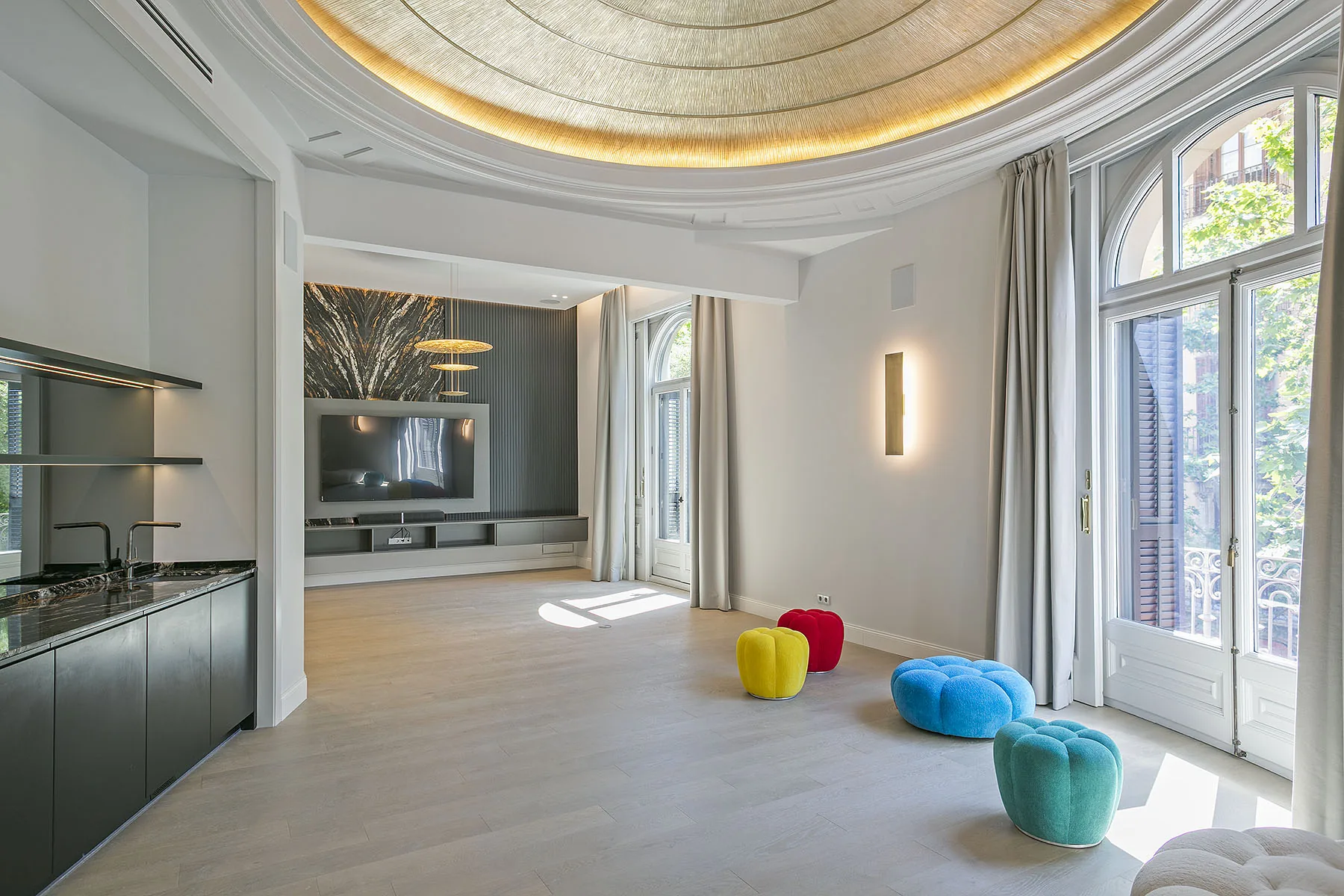
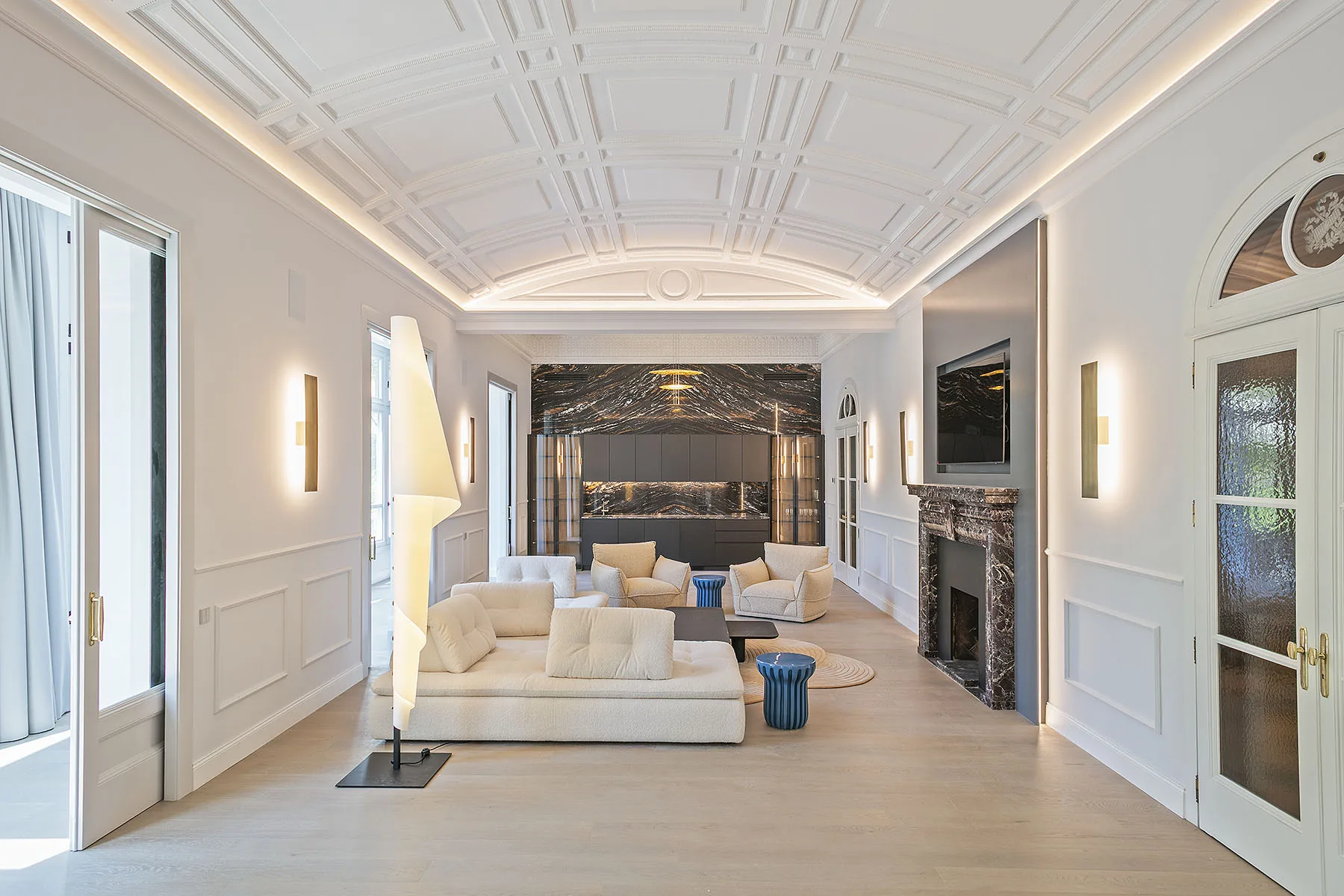
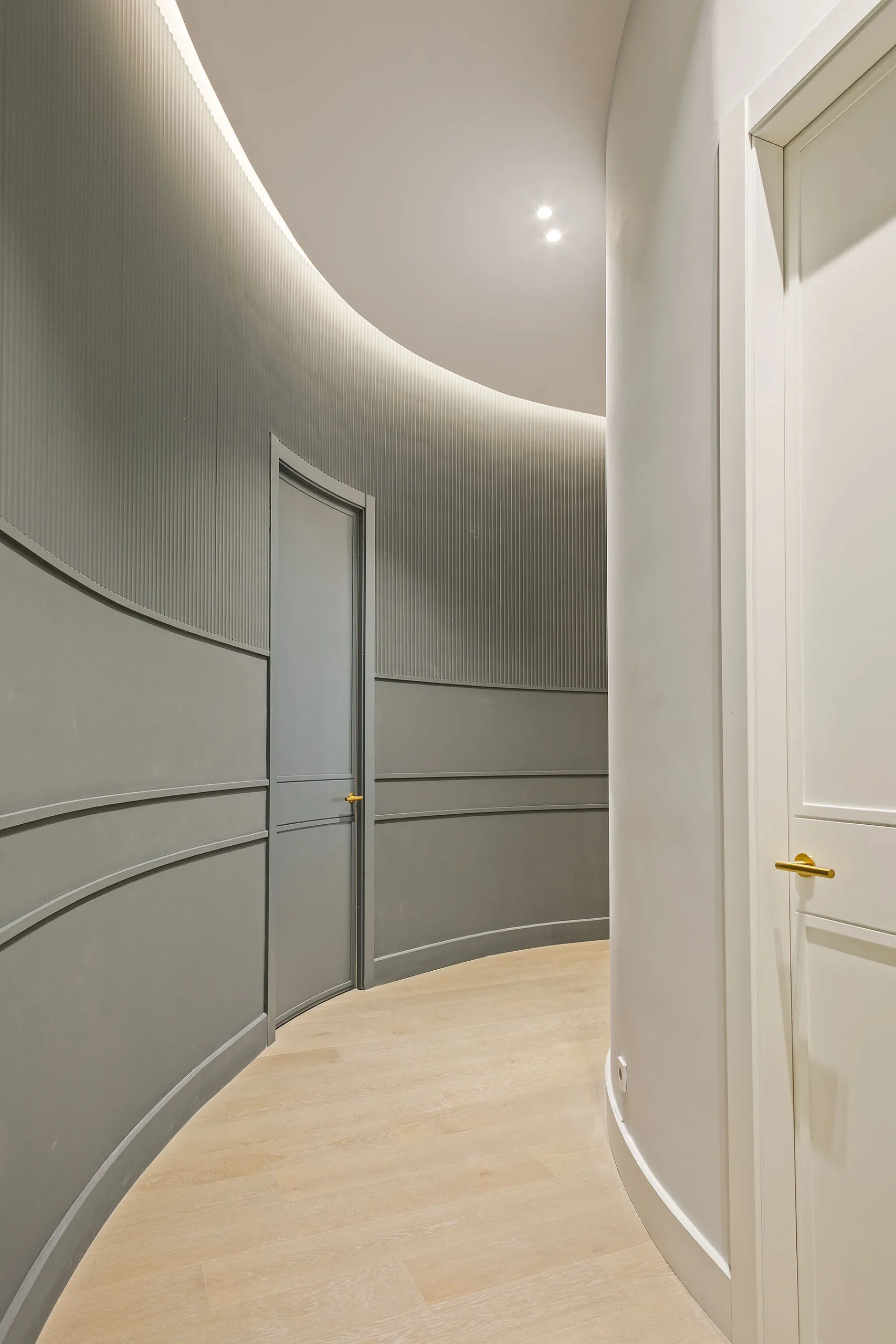
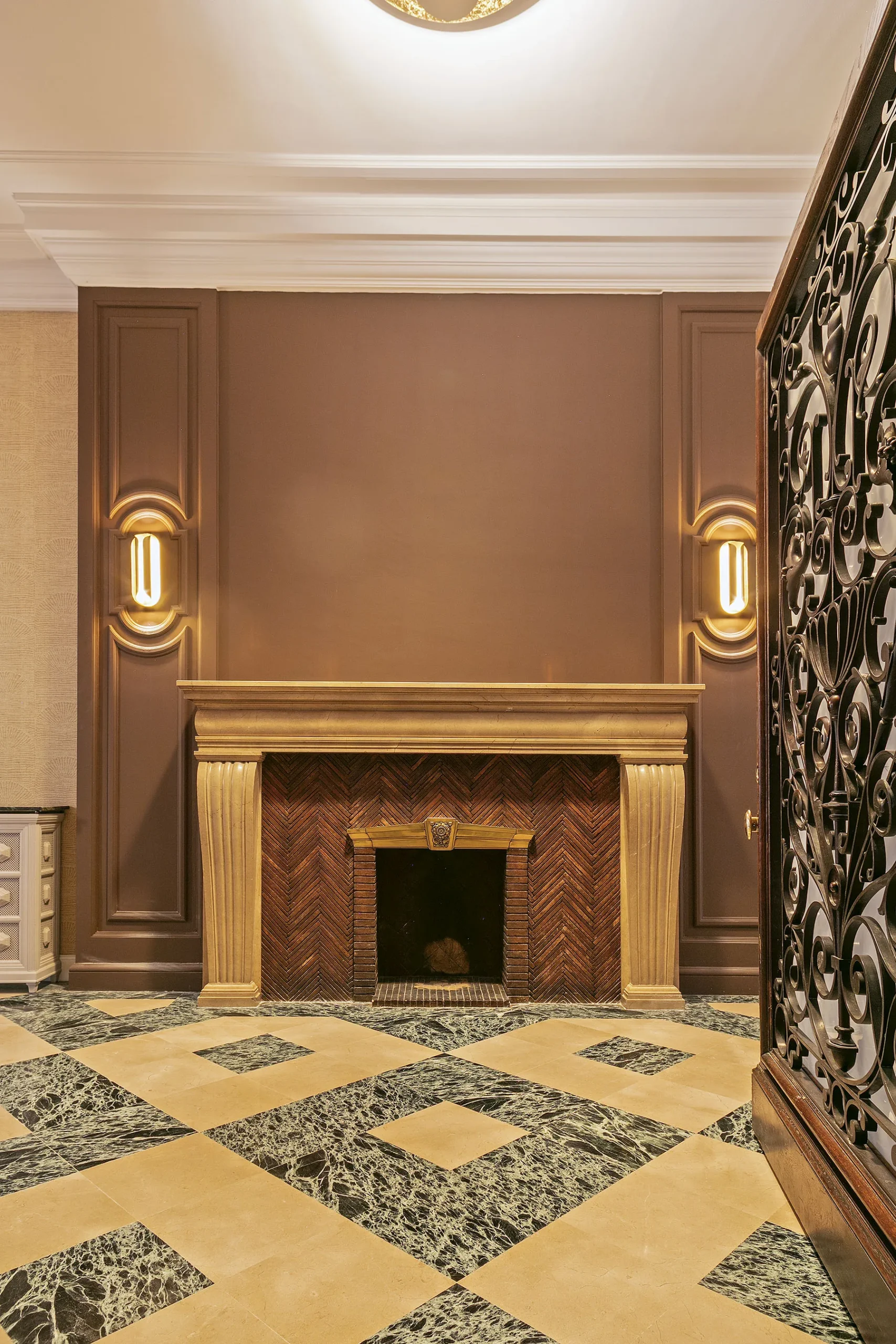
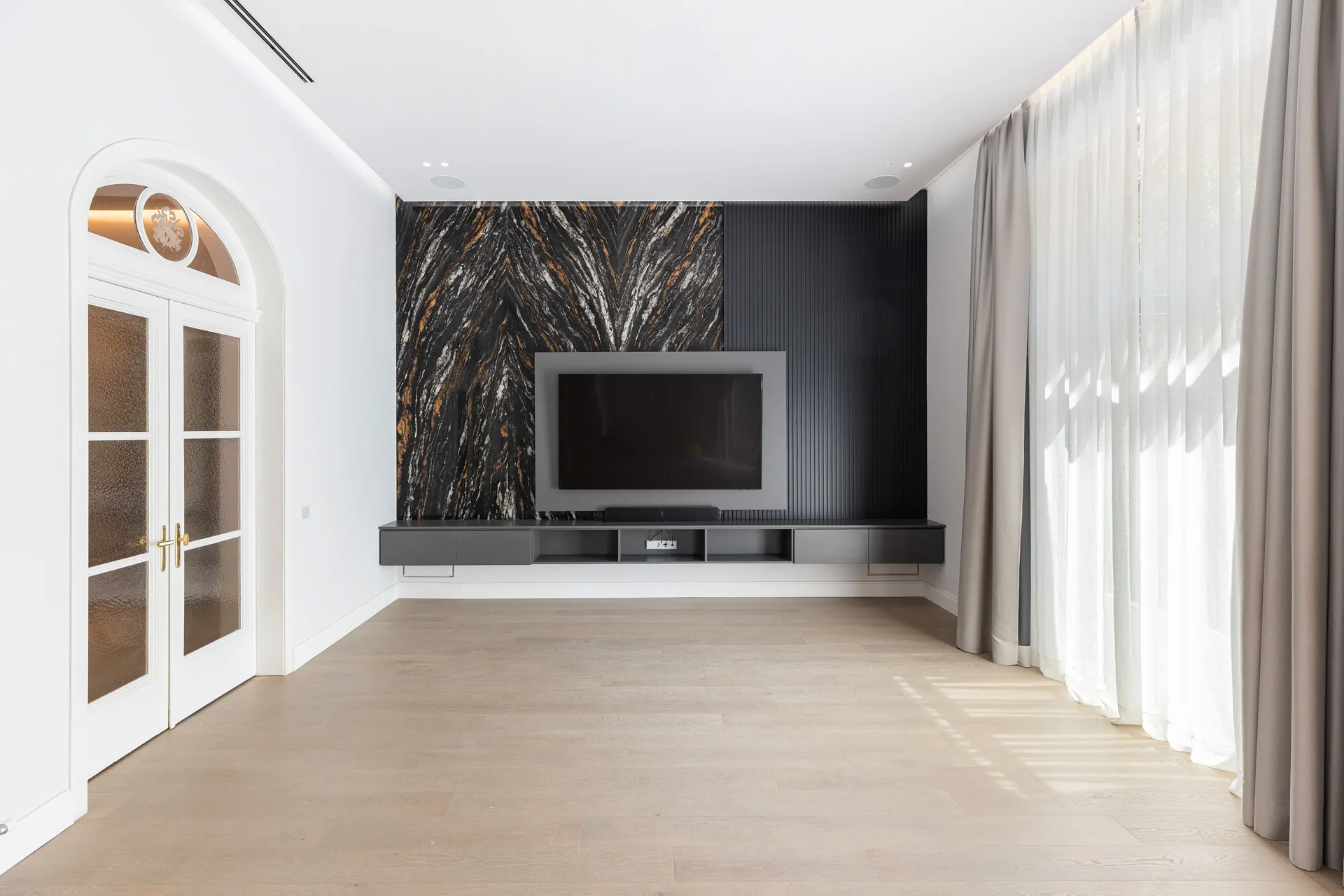
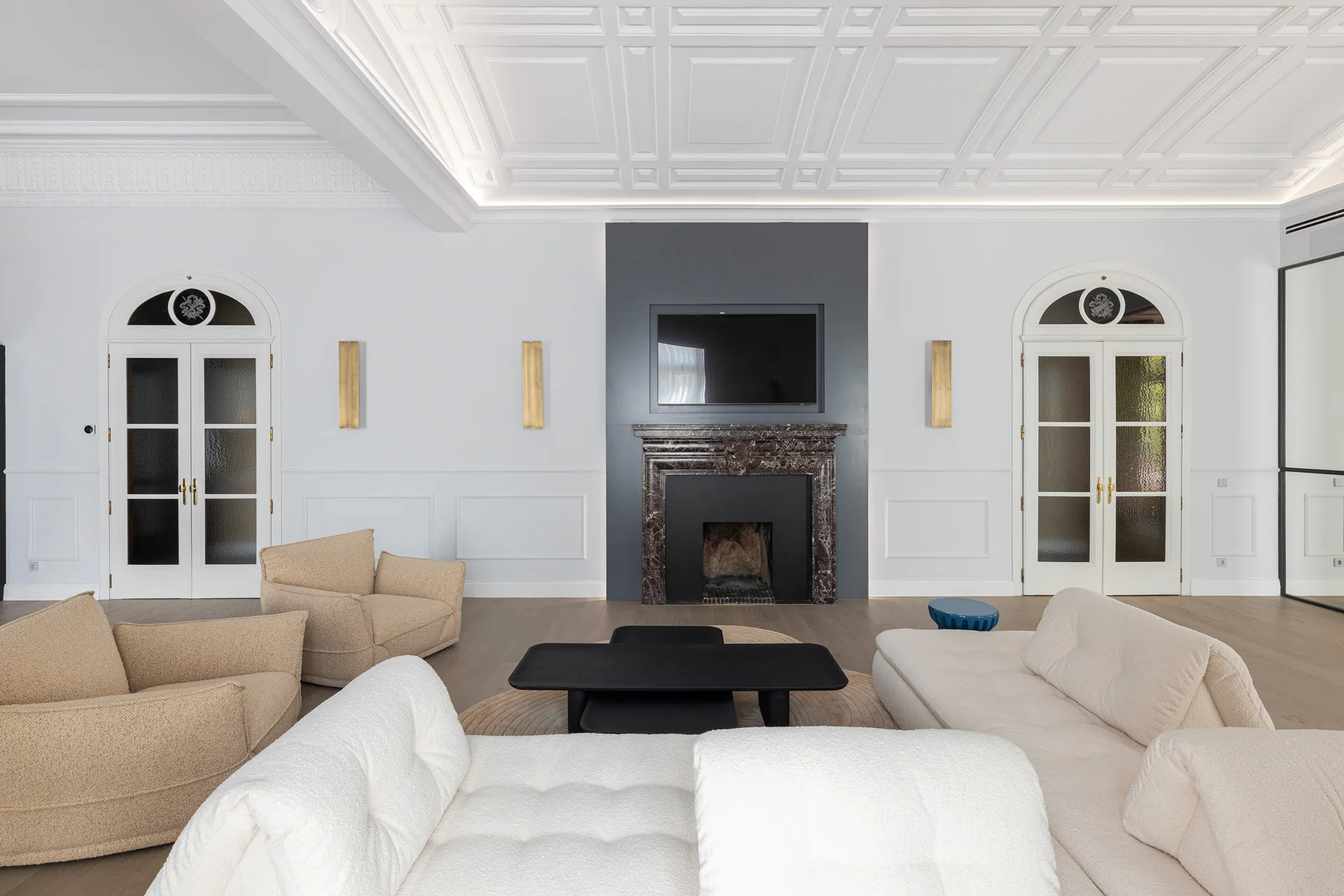
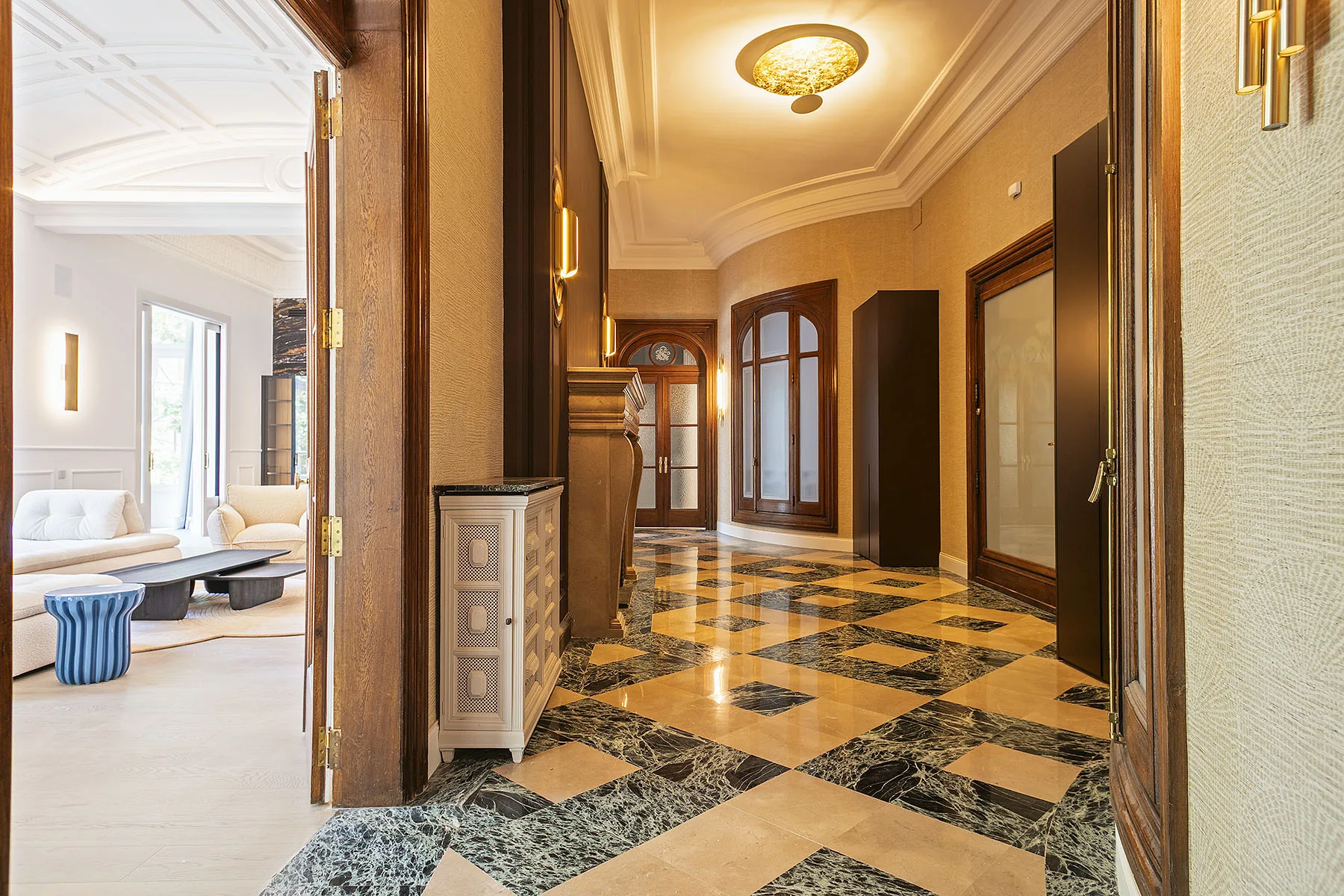
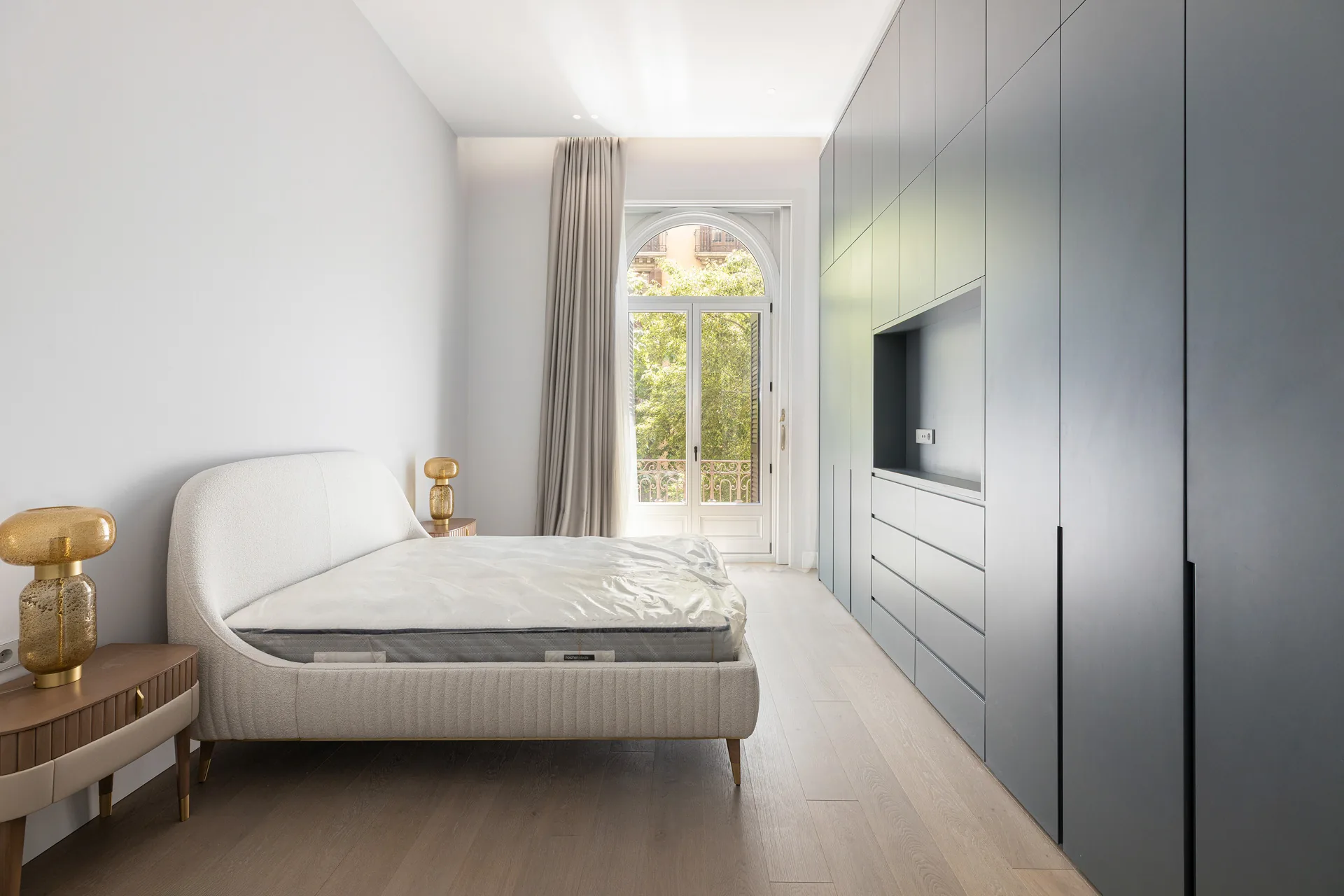
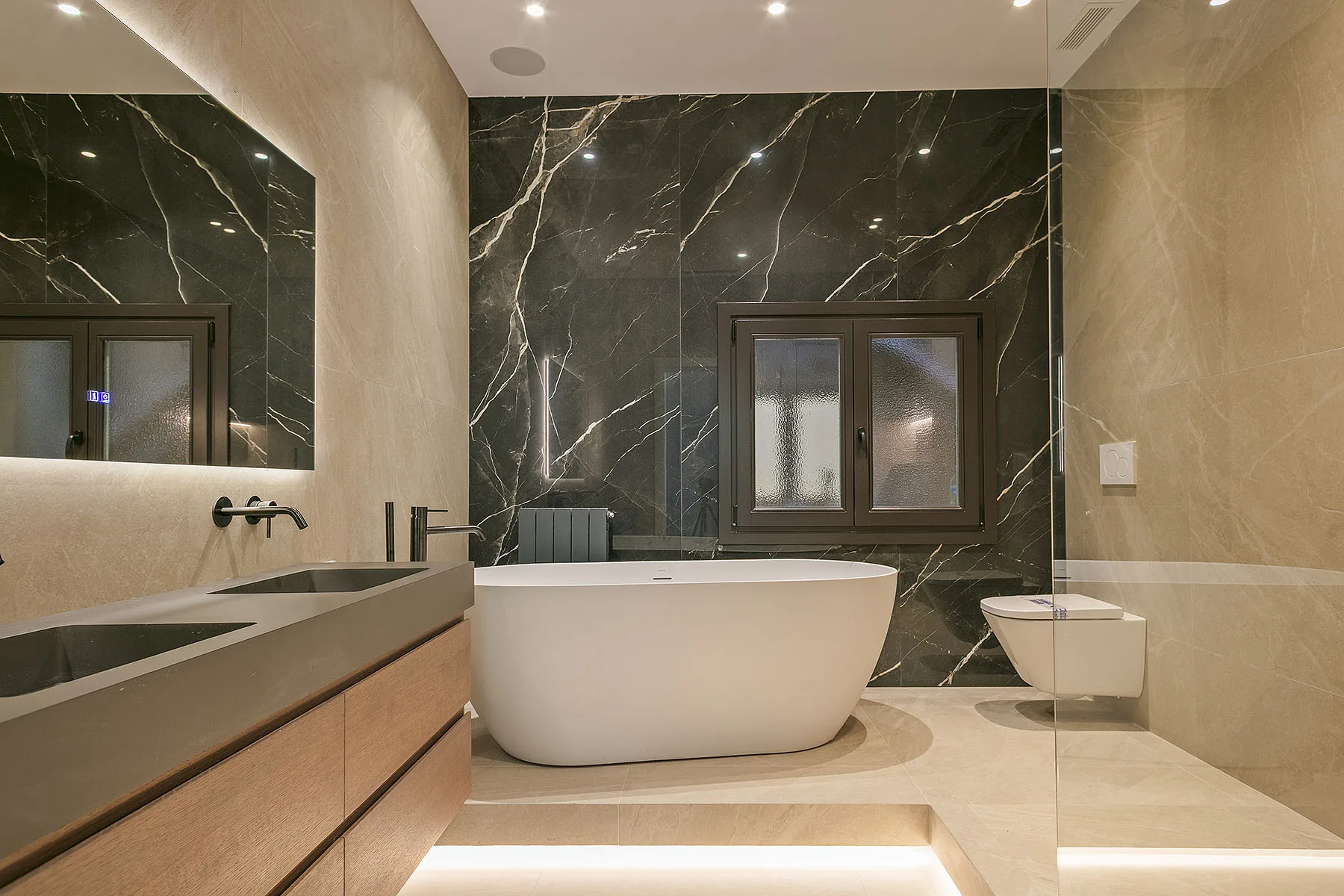
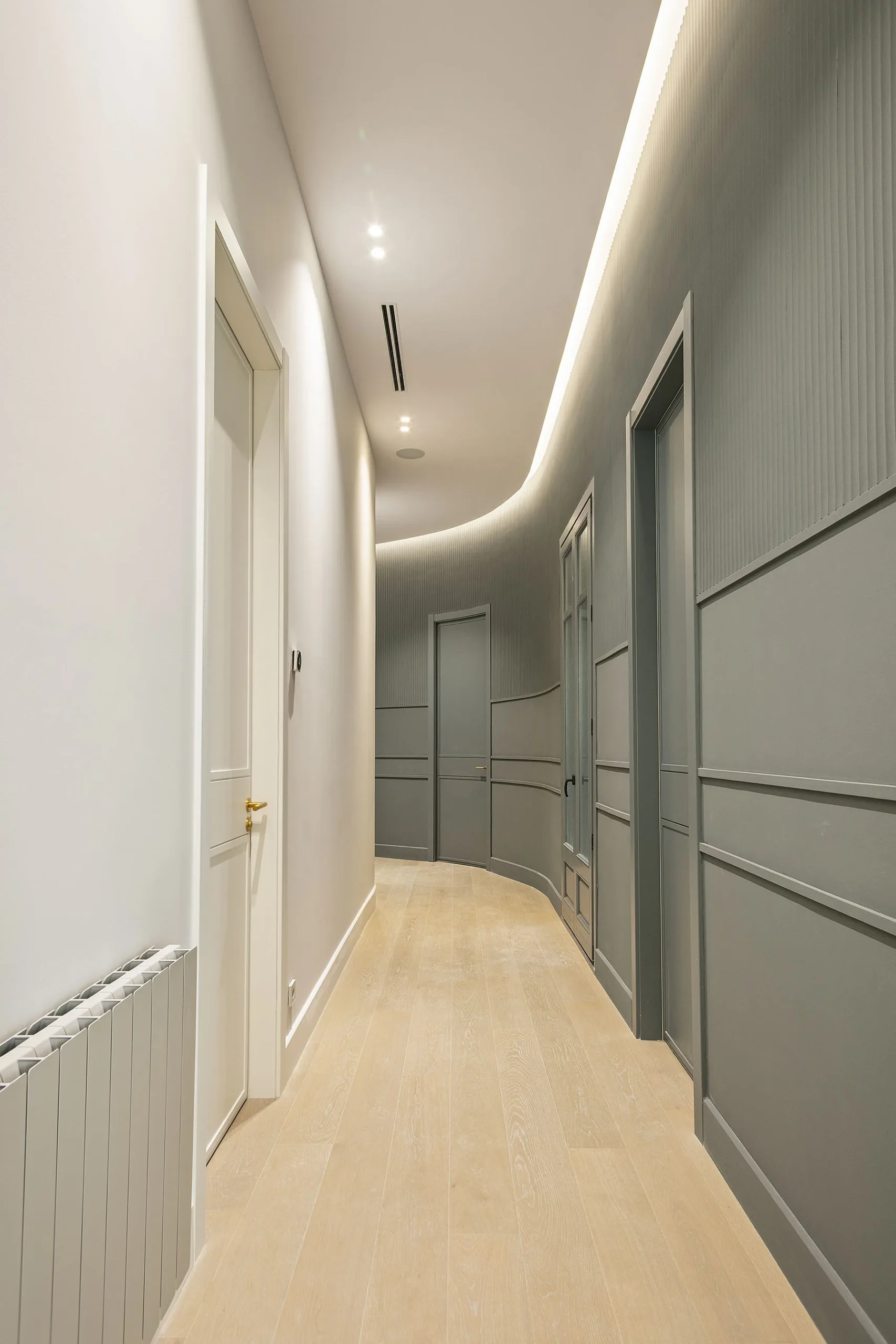
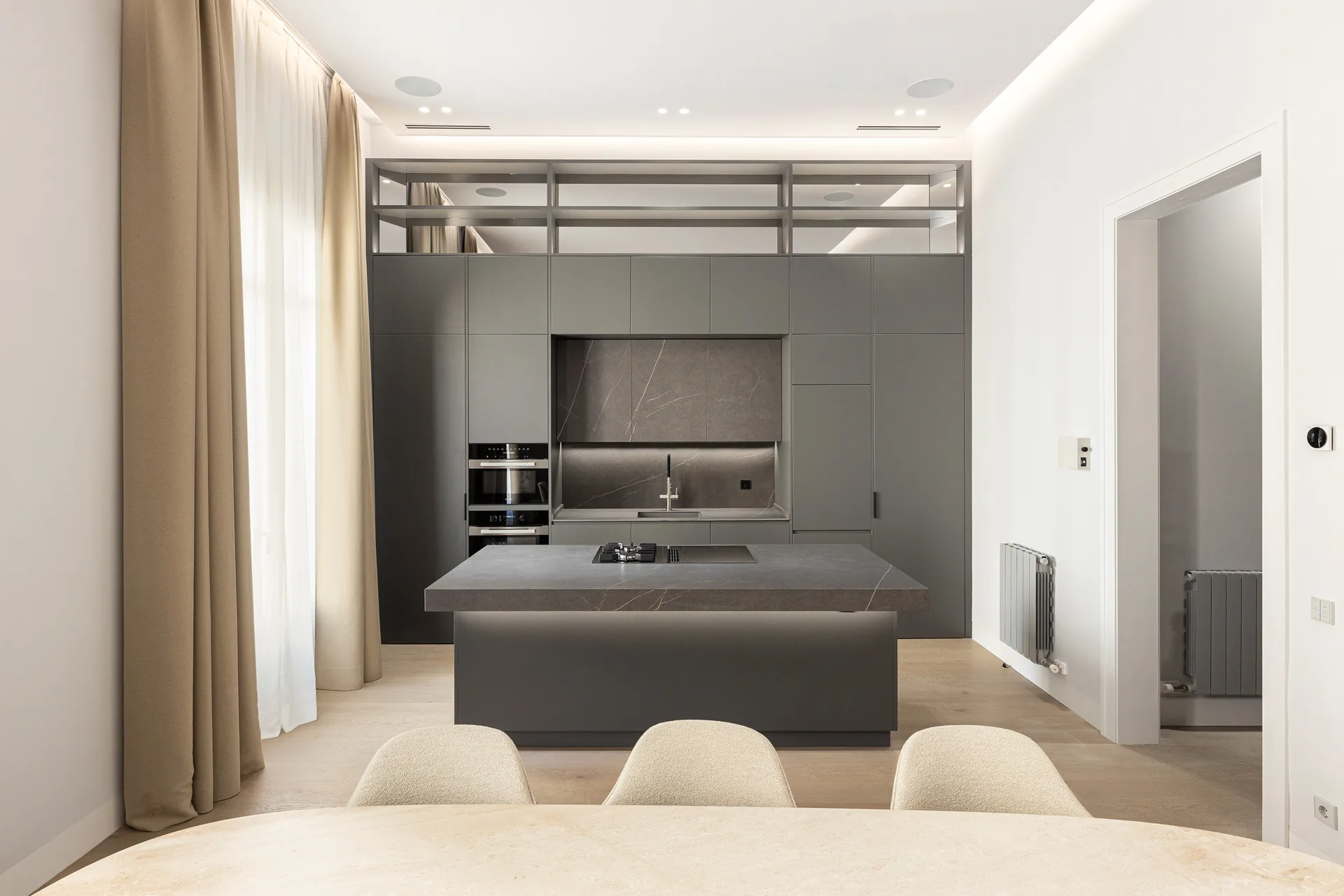
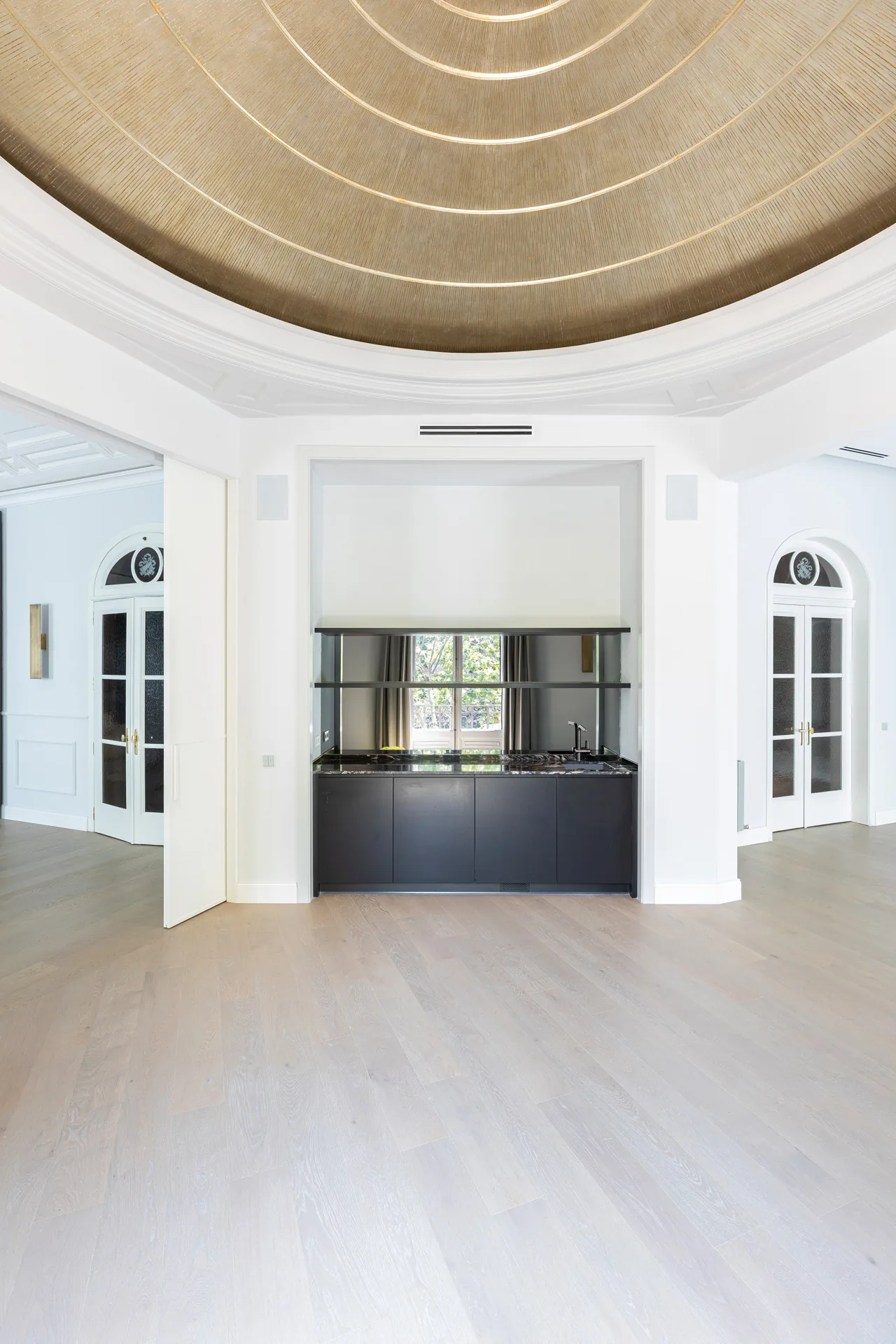
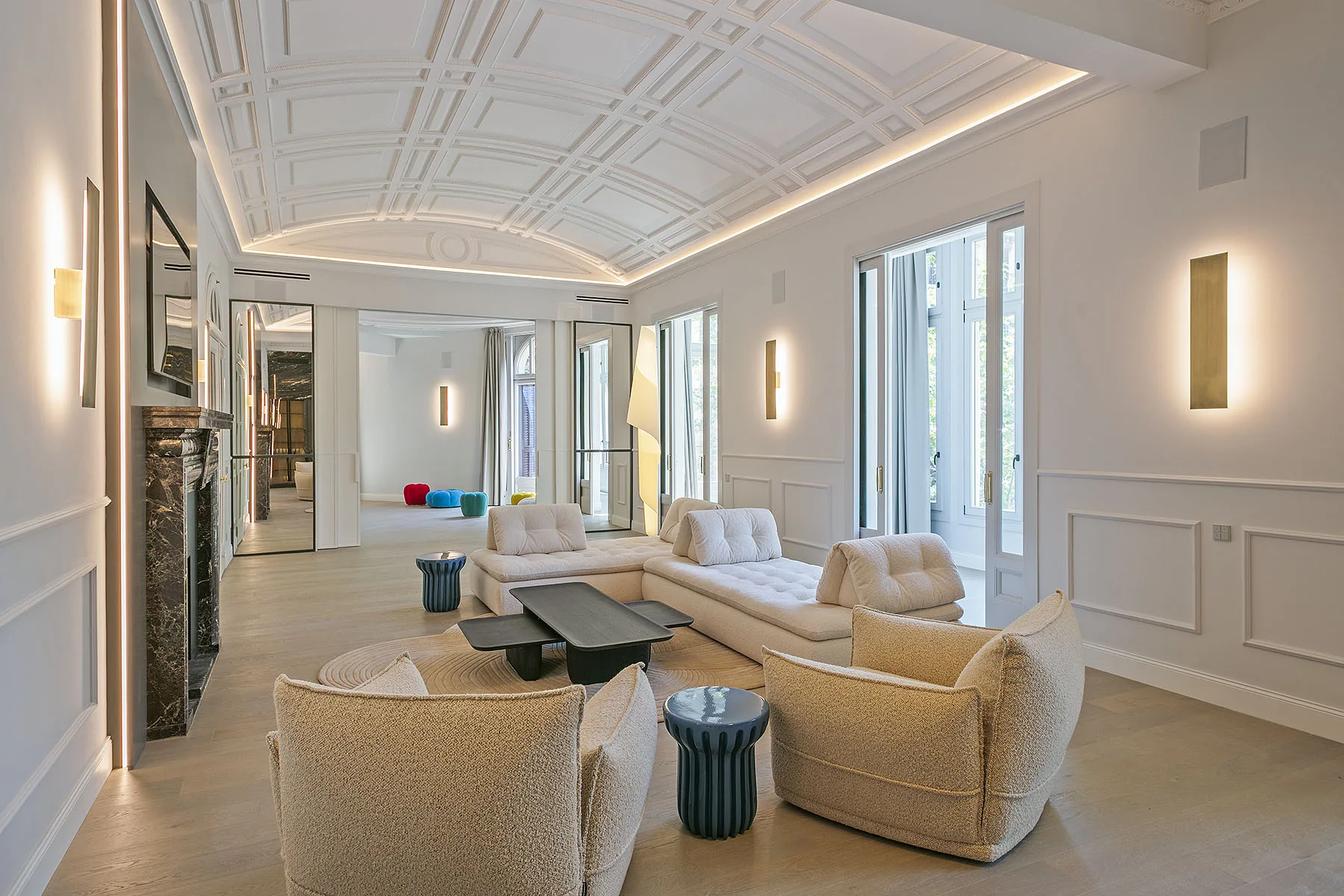
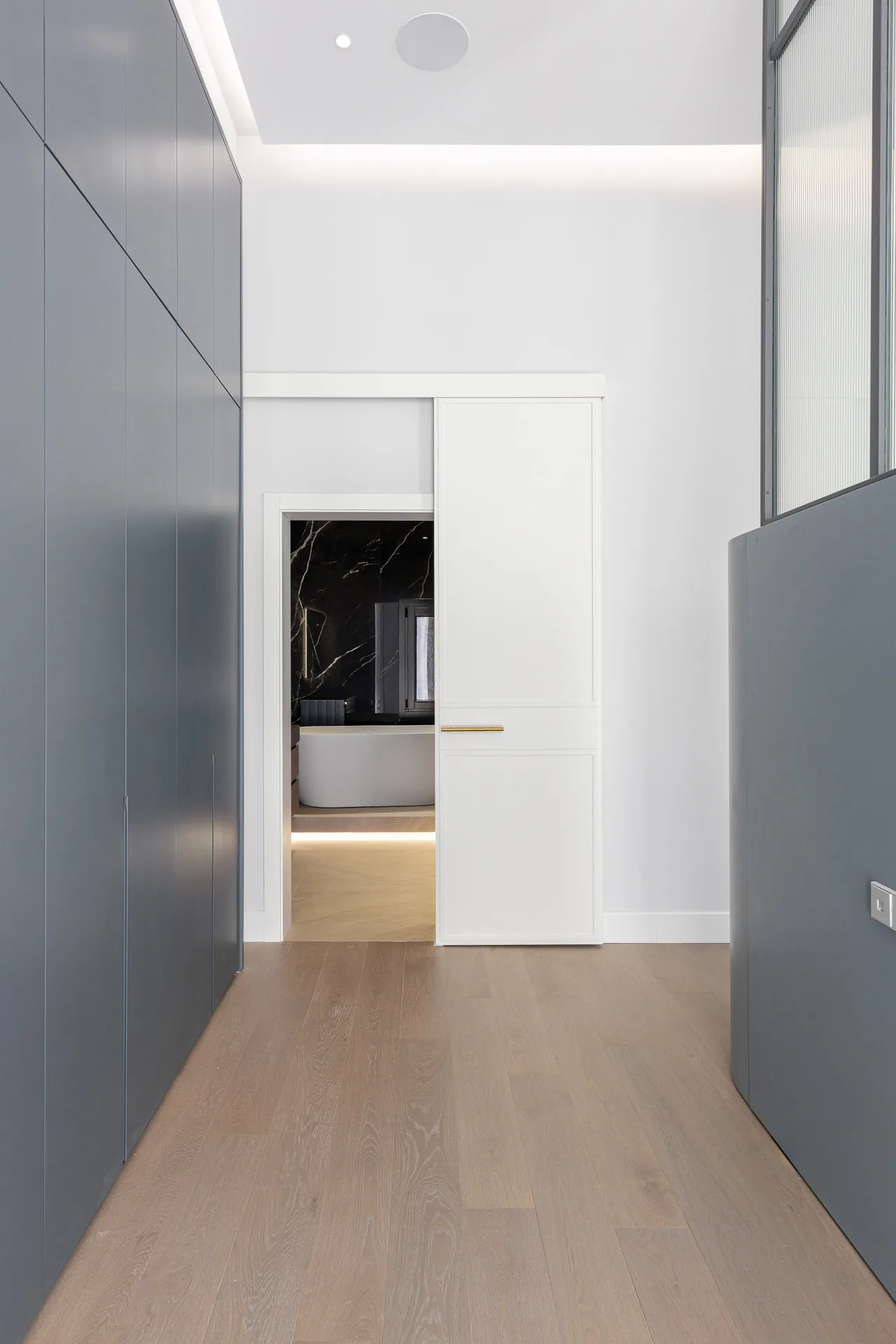
Some projects challenge you to rethink what rehabilitation truly means. When we first stepped into this apartment, we encountered a monumental yet disconnected interior. A fire had destroyed much of the building’s original architecture, and a subsequent transformation had turned it into a home from another era. The apartment had become almost a museum. Its architectural beauty was undeniable, but static; it was a space to be admired rather than lived in. For us, the challenge was not to return it to an origin that no longer existed, but to take a book with several chapters already written and create the next one. Not to erase its evolution, but to reinterpret it.
This was the design vision we shared with our clients: to transform the apartment into a highly functional contemporary home without losing the distinguished character of Barcelona’s architecture.
From an architectural perspective, we decided to preserve the elements that truly define its identity: the mouldings, the dome, the marble fireplace, the wooden doors and shutters, and details such as the door handles. At the same time, we introduced a clearer architectural language.
Integrating contemporary comfort into such delicate architecture was one of the project’s greatest challenges. Systems such as air conditioning had to be incorporated with absolute precision, demonstrating that modern technology and architectural heritage can coexist when a project is approached with sensitivity.
In projects of this kind, we always seek to balance three essential considerations. The first is preserving the elements of greatest architectural value. The second is understanding the needs, lifestyle and personality of those who will inhabit the space. And the third is addressing the technical complexity of making that transformation possible within the constraints of a rehabilitation project.
Ultimately, we achieved something particularly challenging: restoring a human dimension to a space that had seemed untouchable. By respecting its scars and monumental character, we have created a living, intelligent design that can finally breathe.